
Nano Banana vs Flux AI (2026): Speed, Quality, and the Real Trade-Offs
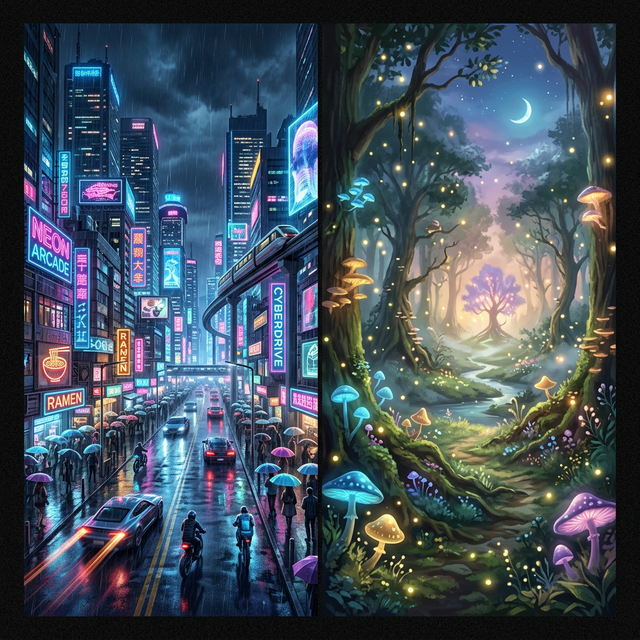
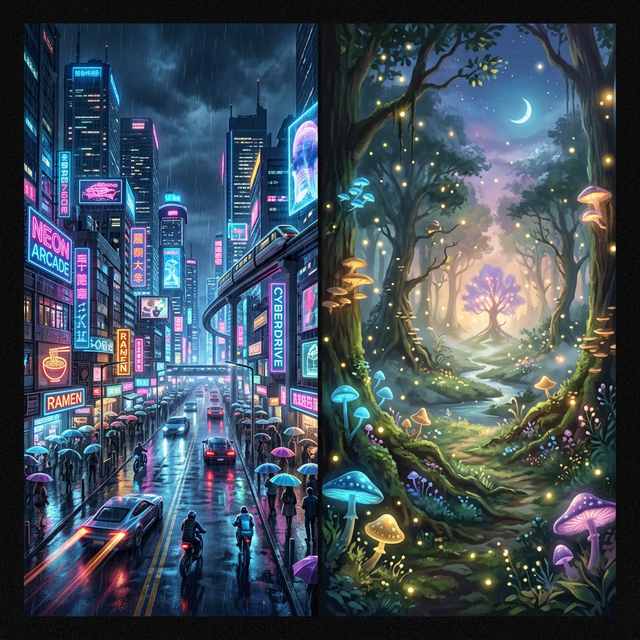 Two different approaches to AI image generation: photorealistic precision vs artistic versatility.
At a startup hackathon in Seoul last month, two teams competed to build the best AI-powered product mockup tool in 48 hours. Team A used Flux Pro for its open-source flexibility and self-hosted control. Team B used Nano Banana 2 for its speed and native 4K output.
Both teams shipped working products. But Team B generated 3x more test images during the hackathon and won the audience vote, partly because their demo showcased sharper, higher-resolution outputs.
The takeaway was not that one tool is "better." It was that Nano Banana and Flux optimize for fundamentally different things, and choosing the right one depends on whether you prioritize commercial production speed or open-source customization.
This guide breaks down every meaningful difference. No hype, just honest trade-offs.
Try Nano Banana yourself: 4 first-login credits + daily check-in rewards on sign-up, no credit card needed.
Quick Verdict
| If you need... | Choose this |
|---|---|
| Production-speed 4K commercial images | Nano Banana |
| Open-source model you can self-host | Flux |
| Fastest possible generation time | Nano Banana 2 |
| Fine-tuning with custom training data | Flux |
| Reliable text rendering in images | Nano Banana |
| Maximum artistic style flexibility | Flux |
| Simple, no-setup workflow | Nano Banana |
| Developer control over the model | Flux |
Full Comparison Table
| Factor | Nano Banana Pro | Nano Banana 2 | Flux Pro | Flux Dev/Schnell |
|---|---|---|---|---|
| Provider | Google Gemini | Google Gemini | Black Forest Labs | Black Forest Labs |
| Model type | Closed (API) | Closed (API) | Closed (API) | Open-source |
| Max resolution | 4K native | 4K native | 2K native | 1K-2K |
| Speed | 10-20 sec | 4-6 sec | 8-15 sec | Varies (hardware-dependent) |
| Text rendering | ~94% accuracy | Excellent | Good | Good |
| Self-hosting | No | No | No | Yes (GPU required) |
| Fine-tuning | No | No | Limited | Full LoRA support |
| Commercial license | Included | Included | API license | Model-dependent |
| Character consistency | 5 characters | 5 characters | Limited | Limited |
| Reference images | Up to 14 | Up to 14 | Limited | Limited |
| Search Grounding | No | Yes | No | No |
Where Nano Banana Wins
1. Resolution and Production Quality
Nano Banana generates native 4K (4096px) images. Flux Pro tops out at 2K in most configurations, and the open-source models typically output at 1K-2K depending on available VRAM.
For marketing teams, ecommerce stores, and print production workflows, this resolution difference is not optional. It is a requirement.
2. Speed at Scale
Nano Banana 2 generates images in 4-6 seconds. Flux Pro typically takes 8-15 seconds through hosted APIs. Self-hosted Flux on consumer GPUs can take 30-60+ seconds depending on hardware.
When Emma, a social media manager handling five client accounts, switched from self-hosted Flux Schnell to Nano Banana 2, her weekly content generation time dropped from 3 hours to 45 minutes. "I stopped babysitting a GPU and started focusing on creative strategy," she said.
3. Text Rendering
Nano Banana Pro's ~94% character accuracy for in-image text is a significant advantage for anyone creating ad banners, product labels, or marketing materials that include typography.
Flux handles text adequately but lacks the specialized text rendering pipeline that makes Nano Banana reliable for production text work.
4. Zero Setup Required
Sign up at Nano Banana Images, open the generator, type a prompt. No GPU setup, no model downloading, no dependency management, no VRAM troubleshooting.
Copy a prompt from the Prompt Gallery and generate in seconds.
Where Flux Wins
1. Open-Source Freedom
Flux Dev and Flux Schnell are open-source models you can download, modify, and run on your own hardware. This gives you complete control over the generation pipeline, data privacy, and model behavior.
For companies with strict data governance requirements or teams that need to customize the model itself, this is a decisive advantage.
2. Fine-Tuning with LoRA
Flux supports LoRA (Low-Rank Adaptation) fine-tuning. You can train the model on your own brand assets, product images, or artistic styles to produce outputs that match your specific visual identity.
Nano Banana uses reference images (up to 14) for style matching, which works well for most use cases but does not reach the customization depth of a fine-tuned model.
3. Cost at Extreme Scale
If you generate thousands of images per day and have existing GPU infrastructure, self-hosting Flux can be cheaper than any API-based service. The model weights are free; you only pay for compute.
For most teams generating under 1,000 images per month, Nano Banana's pricing is more cost-effective when you factor in infrastructure management time.
4. Community and Ecosystem
Flux has a vibrant open-source community creating custom LoRAs, ComfyUI workflows, and specialized extensions. If you enjoy tinkering with generation pipelines and want maximum control, the Flux ecosystem offers more flexibility.
The Deciding Factor
Here is the honest framework:
Choose Nano Banana if you want to generate commercial-quality images fast and move on with your day. You are a marketer, ecommerce operator, content creator, or agency that values speed-to-output over model customization.
Choose Flux if you are a developer, AI researcher, or technical creative who wants full control over the generation pipeline. You have GPU infrastructure (or are willing to rent it), enjoy fine-tuning models, and prioritize customization over convenience.
Use both if you fine-tune Flux for specialized brand-specific outputs while using Nano Banana for your high-volume, day-to-day production needs.
FAQ
Can I use Flux images commercially?
Flux Pro images generated through the API include a commercial license. Self-hosted Flux Dev has a more restrictive license. Check Black Forest Labs' current terms for specifics.
Is Nano Banana based on Flux?
No. Nano Banana is powered by Google's Gemini model family (Gemini 3 Pro and Gemini 3.1 Flash). Flux is built by Black Forest Labs, the team behind Stable Diffusion.
Which produces more realistic images?
Both produce excellent photorealistic output. Nano Banana Pro has an edge in complex lighting, texture detail, and multi-element compositions due to its deeper reasoning architecture. Flux excels in artistic and stylized outputs, especially with community LoRAs.
Can I switch from Flux to Nano Banana?
Yes. Your text prompts work on both platforms. Try Nano Banana free with 4 first-login credits + daily check-in rewards and compare.
What's Next
- Try Nano Banana: AI Generator with 4 first-login credits + daily check-in rewards
- Browse prompts: 500+ Templates
- More comparisons: Nano Banana vs DALL-E | Nano Banana 2 vs Pro
Generate your first 4K image free →
Nano Banana Images is not affiliated with Black Forest Labs or Flux AI. All product names are trademarks of their respective owners.