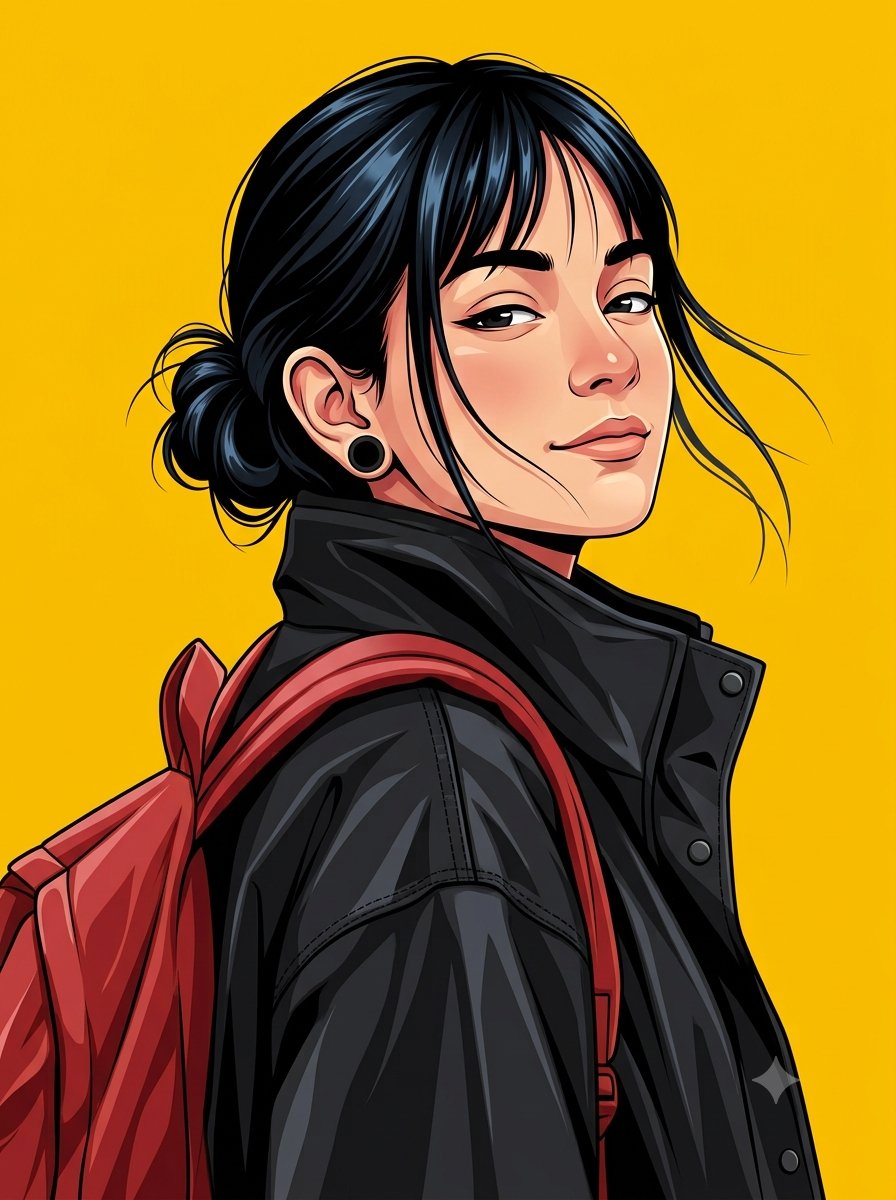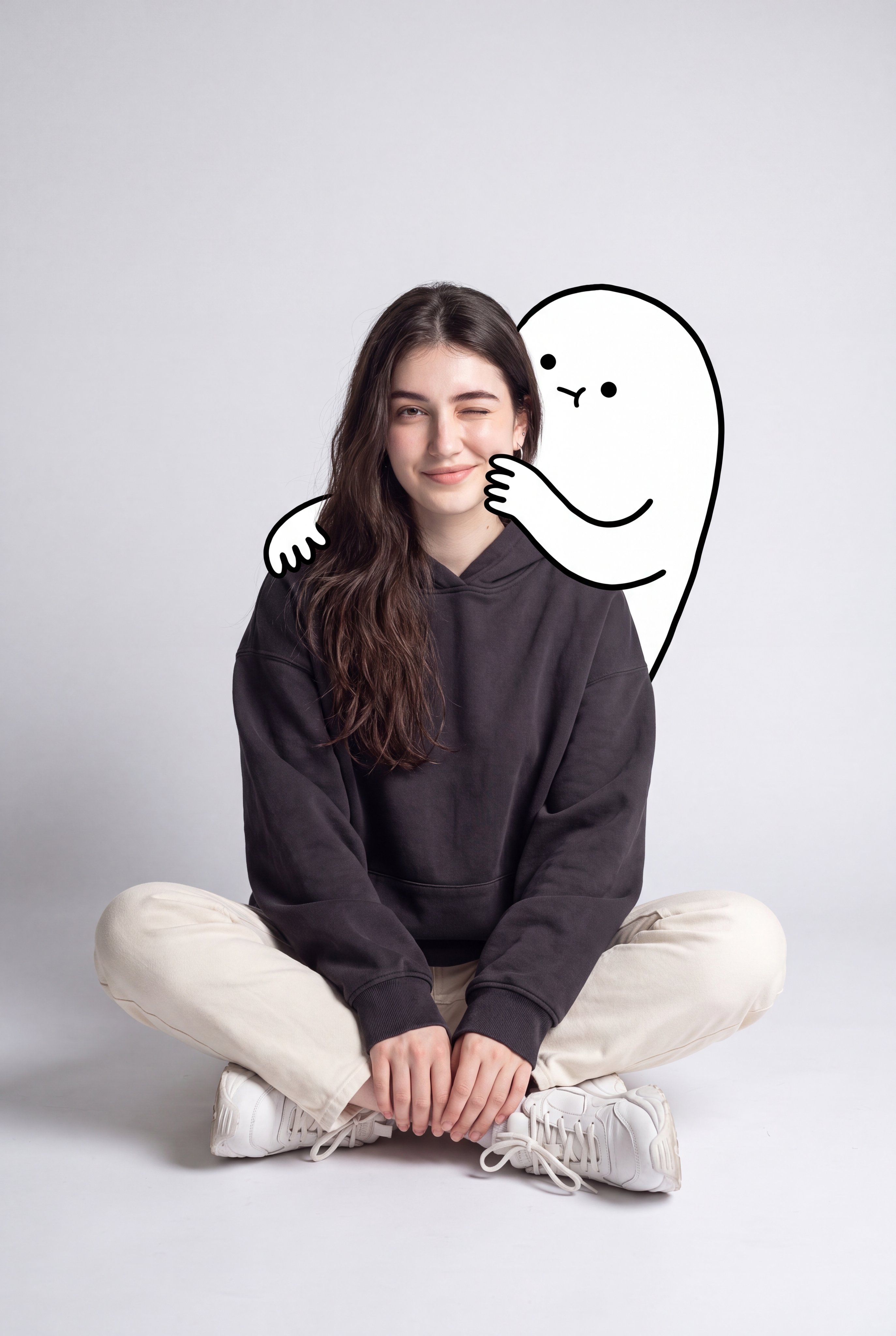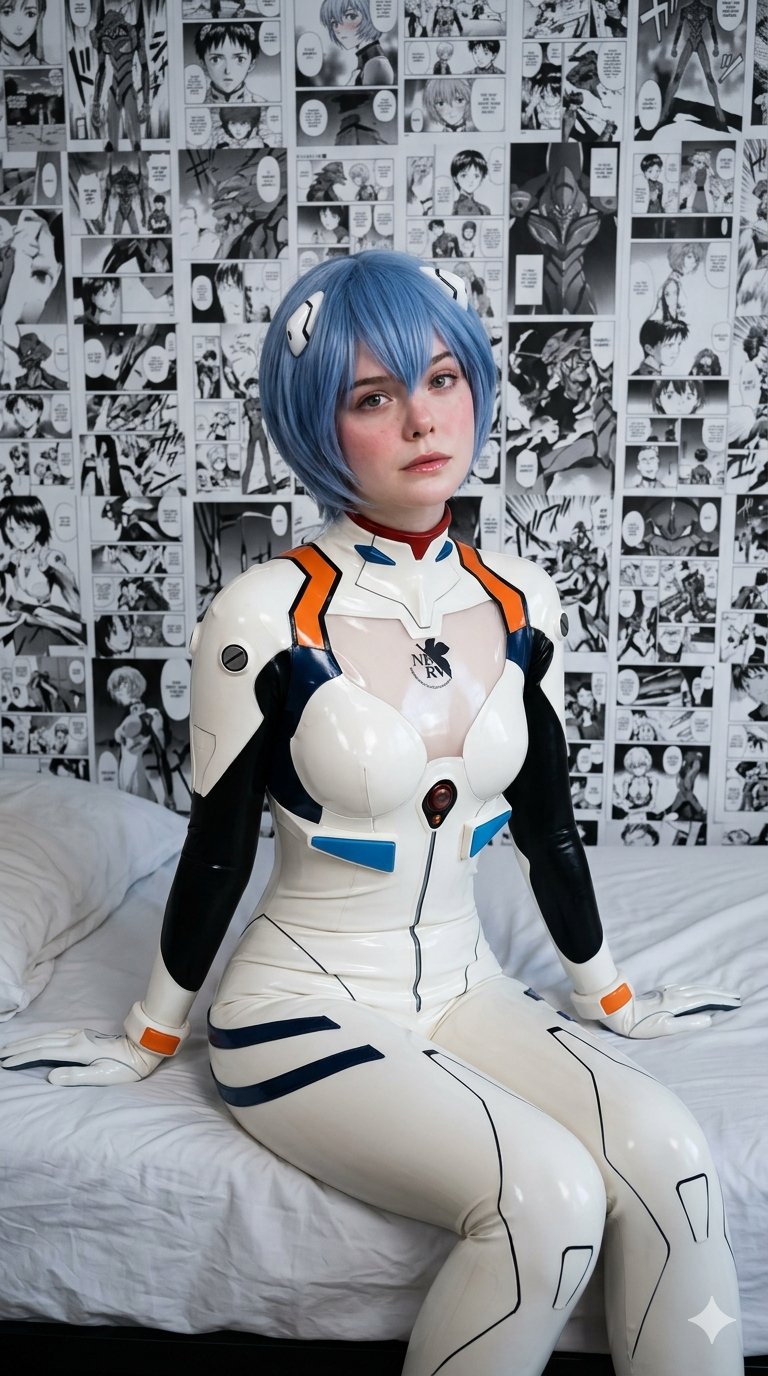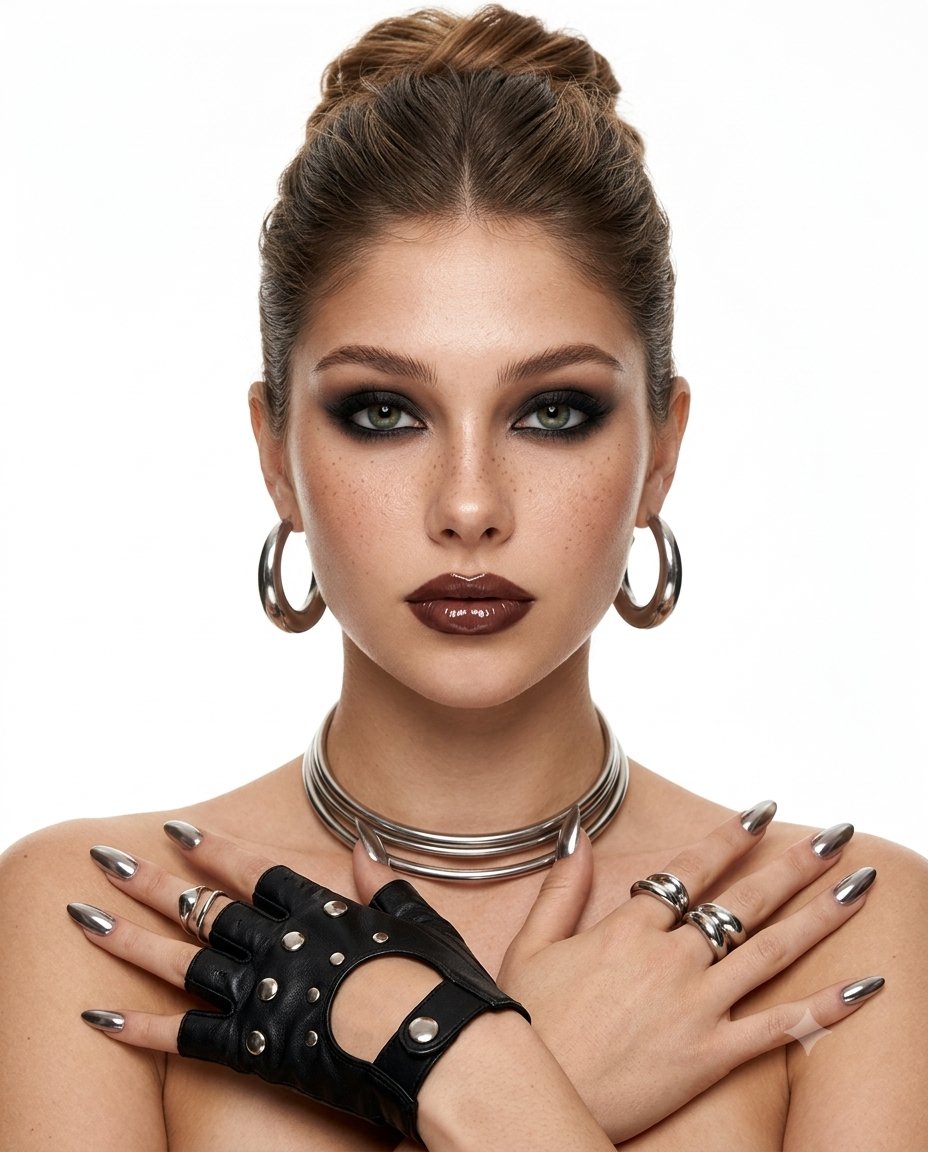
Gemini Nano banana A highly refined...
Ratio 3:4Text-to-Image
Creator Reference:@HustleXR
Original Post

Copy this Nano Banana Pro text-to-image prompt to create character...

Copy this Nano Banana Pro text-to-image prompt to create character portraits with editorial styling and photorealistic detail. Best in 3:4 framing.

Master PromptClick to select all

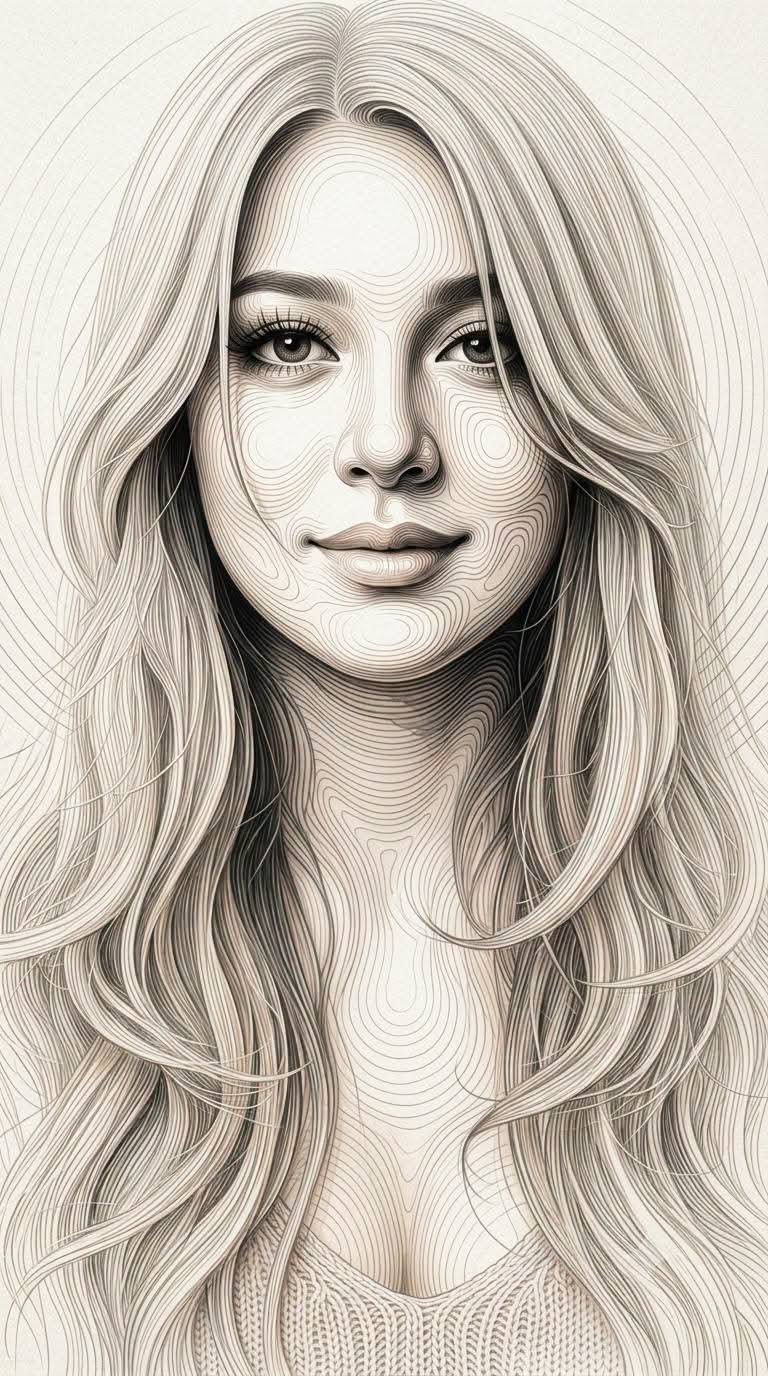
Gemini Nano banana 🍌 A highly refined contemporary mixed-media portrait style combining an ethereal high-key fashion aesthetic with intricate concentric contour-line artwork inspired by natural growth rings and fingerprint-like topographic patterns. The human subject should retain an elegant, soft, luminous, almost dreamlike presence while the entire visual structure is organically constructed through hundreds of delicate continuous concentric and flowing contour lines. Replace conventional flat shading and ordinary outlines with dense nested curved lines that follow the anatomy and three-dimensional structure of the human form. The lines should naturally conform to the contours of the face, forehead, cheeks, nose, lips, jaw, neck, shoulders, clothing, and hair, creating the illusion that the entire subject is sculpted from flowing rings and fine engraved contours. The line patterns should behave like organic topographic growth rings rather than geometric circles. Lines continuously expand, contract, bend, merge, separate, and change direction according to the underlying form. Around the eyes, nose, lips, and facial planes, the contours become tightly concentrated and delicately curved; across larger surfaces they gradually spread into wider flowing rings. Hair should be constructed from extremely fine flowing contour strands, with hundreds of elongated curved lines sweeping outward and merging into larger concentric patterns. The hair should feel weightless and fluid, almost dissolving into the surrounding background while maintaining an intricate line-based structure. Preserve the reference's soft luminous skin, delicate facial modeling, subtle blush, translucent highlights, pale neutral tones, and graceful editorial beauty. The human form should remain recognizable and aesthetically refined beneath the contour-line construction rather than becoming an abstract pattern. Introduce selective high-density black and charcoal contour areas to create depth and visual emphasis. Lines become progressively darker and closer together in recessed areas and shadow regions, while highlights contain sparse, extremely fine pale-gray lines and larger areas of negative space. This creates tonal values entirely through line density and spacing, rather than conventional painted shading. Allow portions of the contour lines to extend beyond the silhouette, forming expansive organic rings and flowing arcs around the subject. These external lines should gradually fade, break apart, become thinner, and dissolve into the background, creating an atmospheric transition between the human figure and the surrounding space. Use a predominantly luminous ivory, white, soft gray, pale beige, and subtle natural skin-tone palette, with deep charcoal-black lines providing controlled contrast. Maintain a clean, airy, almost monochromatic elegance while preserving subtle full-color skin undertones. The surface should have a fine tactile paper or archival-art texture, with extremely subtle grain visible beneath the delicate linework. The final artwork should feel like a fusion of luxury editorial portraiture, precision engraving, fingerprint patterns, tree-ring structures, topographic contour mapping, and ethereal fine-art illustration. Ultra-fine continuous contour lines, concentric organic rings, fingerprint-inspired patterns, topographic line density, flowing anatomical linework, delicate engraved micro-lines, ethereal luminous portrait, soft high-key lighting, subtle realistic skin tones, dramatic line-density shading, intricate negative space, flowing hair contours, atmospheric line dissolution, sophisticated contemporary fine art, tactile paper texture, extremely detailed craftsmanship, elegant surrealism, museum-quality visual refinement. Avoid: perfectly circular geometric patterns, rigid mechanical lines, random scribbles, crack-like textures, ordinary cross-hatching, heavy black outlines, flat vector illustration, cartoon aesthetics, excessive color.

Optimal Generation Parameters
Aspect Ratio
3:4
ModelNano Banana Pro
Aesthetic KeynotesEditorial, Photorealistic, Minimalist, Anime-Inspired

Test & Generate with GPT Image 2

Prompt tokens and APIMart GPT Image 2 are pre-loaded. Customize or click generate.

GPT Image 2 Generator

Copy this Nano Banana Pro text-to-image prompt to create character...
Nano Banana 2
Creative Blueprint & Recipe Breakdown

How to Master & Adapt This Visual

Professional prompts rely on modular tokens. Use this recipe breakdown to swap subjects, control studio lighting, and eliminate common AI artifacts.

Prompt Variables Blueprint (What to Customize First)

Iterate on one variable group at a time to maintain stylistic consistency:

1Change the subject block first: A highly refined contemporary mixed-media portrait style combining an ethereal high-key fashion aesthetic with intricate...
2Adjust the mood through light and backdrop cues: The hair should feel weightless and fluid, almost dissolving into the surrounding background while maintaining an...
3Keep the finish constraints aligned while you test variants: The surface should have a fine tactile paper or archival-art texture, with extremely subtle grain visible beneath the...

3 Style Recipes

Swap the subject, keep the frameRecipe #1

Replace a highly refined contemporary mixed-media portrait style combining an ethereal high-key... with your own subject while leaving the camera and composition cues intact.

Retune the mood, not the structureRecipe #2

Keep the subject block, then rewrite the hair should feel weightless and fluid, almost dissolving into the surrounding... to move the image into a new lighting setup.

Change the finish without breaking geometryRecipe #3

Test a new texture or rendering finish by rewriting the surface should have a fine tactile paper or archival-art texture, with extremely... while leaving the scene structure alone.

Production Quality Guide: Best Use vs. Pitfalls

Ideal Use Cases (Where it Shines)
  • •Portrait studies, beauty concepts, and tightly framed editorial references.
  • •Text-to-image ideation when you want a reliable starting frame in 3:4.
  • •Clean studio results where spacing, surfaces, and product separation need to read immediately.
  • ✓Use 3:4 on the first run, then test alternate crops after the base composition is working.
  • ✓Lock the environment before fine styling changes: The hair should feel weightless and fluid, almost dissolving into the surrounding background while maintaining...
Pitfalls to Avoid (Common Mistakes)
  • !Ignoring the recommended 3:4 crop on the first run. The prompt's composition cues were written for that frame.
  • !Changing subject, lighting, and finish together. You lose the stable base that makes the prompt reusable.
  • !Dropping the lighting or backdrop cues too early. Those clauses usually carry most of the mood and depth.
  • ✕Skip if: You need a wide environment shot or multiple subjects competing for attention in the same frame.
  • ✕Skip if: You need to begin with a radically different crop than 3:4 instead of honoring the existing composition hints.
  • ✕Skip if: You expect to rewrite subject, lighting, and finish simultaneously on the very first pass.

Technical Analysis & How This Prompt Works

Copy this Nano Banana Pro text-to-image prompt to create character portraits with editorial styling and photorealistic detail. Best in 3:4 framing. Ready...

Keep the base prompt intact for the first run, then iterate on one variable at a time so the composition stays stable. Keep the generator on 3:4 for the closest match. The mood is anchored by the hair should feel weightless and fluid, almost dissolving into the surrounding background while maintaining...

Explore Related Curated Categories

More Visual Inspirations

Explore prompts sharing similar aesthetic tokens and composition
View all prompts →